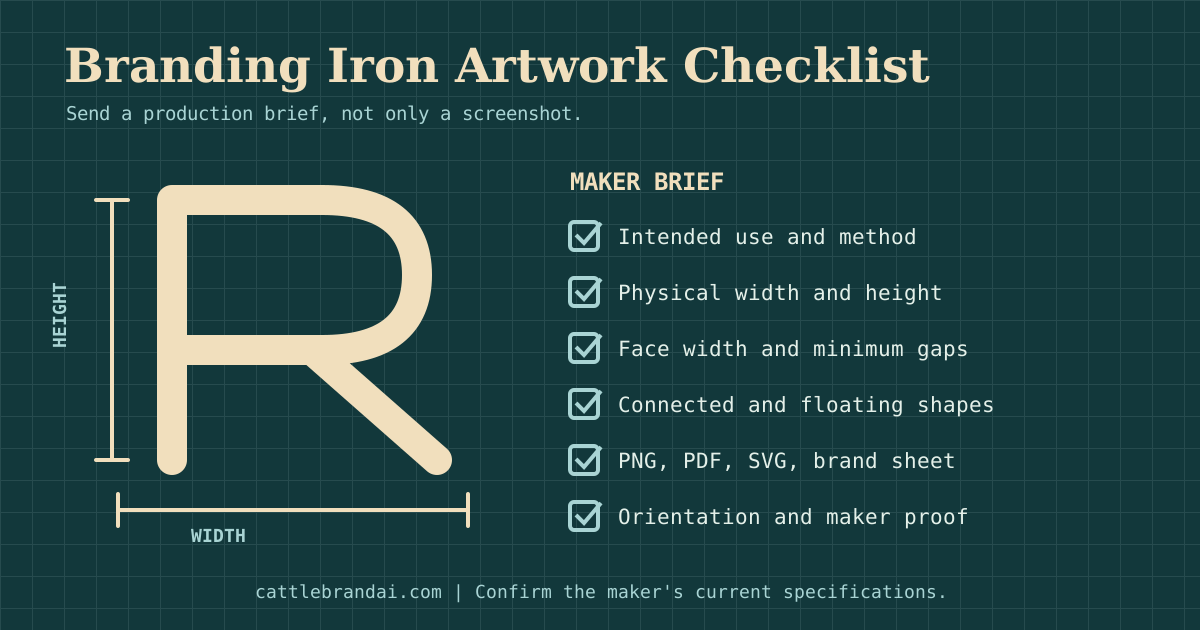
A clean cattle brand image is not automatically a fabrication specification. A branding iron maker still needs to know the intended material or animal use, physical size, construction method, and whether narrow gaps or floating shapes can be manufactured reliably.
Use this checklist before requesting a quote. Do not guess dimensions from the screen.
1. State the Intended Use First
Tell the maker exactly what the iron is intended to mark:
- Livestock, including animal type and approximate age or size
- Wood
- Firm or soft leather
- Food
- Plastic or another specialized material
Different materials can require different temperatures, relief, face construction, and artwork treatment. A design suitable for a ranch sign is not automatically suitable for livestock.
If the request involves livestock, also identify whether you are discussing hot-iron or freeze branding and confirm local requirements with the appropriate authority.
2. Provide the Target Physical Size
Specify width and height in inches or millimeters. If you do not know the correct size, ask the maker to recommend one based on the intended use rather than scaling the digital file yourself.
Include:
- Maximum overall width
- Maximum overall height
- Intended placement
- Whether the same design must be made in more than one size
Washington State Department of Agriculture branding instructions note that livestock iron size and spacing vary by use and discuss approximately one-inch spaces between brand characters. Treat that as an example from one authority, not a universal rule.
3. Confirm Face Width and Minimum Gaps
Ask the maker:
- What is the minimum supported stroke or face width?
- What is the minimum clear gap between adjacent strokes?
- Will heat spread require additional spacing?
- Should internal corners be rounded?
Do not convert these answers directly into pixels. Record them as physical measurements and have the production artwork prepared at scale.
4. Identify Floating or Disconnected Shapes
Some construction methods can support disconnected components; others may require bridges or a backing plate.
Mark every element that is not connected to the main design, including:
- Dots
- Small stars
- Separate bars
- Enclosed counters
- Tiny pictorial symbols
Ask whether those parts can be manufactured and aligned. Do not add connecting bars until the maker confirms they are required.
5. Send More Than a Screenshot
A useful review package can include:
| File | Purpose |
|---|---|
| Black-on-white PNG | Fast visual reference |
| Transparent PNG | Placement and layout review |
| Image-only PDF | Simple shareable document |
| SVG | Scalable container for design handoff; confirm whether paths are required |
| Brand sheet | Prompt, design context, and selected candidate |
| Registration notes | Registry status and intended placement, if already confirmed |
The CattleBrandAI SVG export may contain a raster image inside an SVG wrapper. It is not the same as production-ready traced vector paths. Tell the maker what the file contains and ask whether manual vector tracing is needed.
The Export Package guide explains each included file.
6. Do Not Mirror the Artwork Without Confirmation
The physical branding head may need reversed geometry so the applied mark reads correctly. The maker normally handles production orientation.
Send the design in the direction you want the final mark to read and ask:
Should I provide normal-reading artwork, or do you want a mirrored production file?
Avoid maintaining two unlabeled versions. If a mirrored file is requested, label it clearly as MIRRORED FOR PRODUCTION REVIEW.
7. Ask for a Proof
Before manufacturing, request a proof that identifies:
- Final reading direction
- Overall dimensions
- Stroke or face width
- Spacing between characters
- Connected and disconnected components
- Handle, heat source, or cooling method if relevant
Check the proof against your approved brand design rather than only comparing it with memory.
8. Keep Registration Separate From Fabrication
A fabricator can advise whether artwork is buildable, but that does not mean the mark is available or legally recorded. Likewise, registration approval does not replace fabrication review.
Use the state cattle brand registration resources and keep written confirmation from the responsible authority.
Practical Reference Sources
- Washington State Department of Agriculture: Conventional and Electric Hot-Iron Instructions
- Oklahoma State University: Livestock Branding in Oklahoma
- Branding Irons Unlimited: Branding Head Terminology
Always ask your selected maker for their current specifications; manufacturing methods differ.
Prepare the Design
If the maker requests a simpler mark, return to Refine Brand and change one production constraint at a time. The line weight and spacing guide provides a useful design review before handoff.